

Engineer's Guide to SS 347H 180° Elbows | Stainless India
Discover why 347H 180-degree elbows are essential for high-temperature systems. Learn the benefits of high-carbon stabilization over standard stainless steel.
When a process line demands a complete reversal of flow direction, the fitting at the center of that decision carries more engineering weight than its compact geometry suggests. A stainless steel elbow 180 degree — the return bend — is not simply a directional component. In high-temperature industrial systems operating above 800°F, it is a stress concentrator, a thermal cycling target, and a corrosion risk point, all compressed into a single welded fitting. Selecting the wrong alloy for that fitting is not a minor specification error. It is a failure waiting to be scheduled.
This guide is written for engineers, materials specialists, and procurement managers who need more than a datasheet summary. It addresses the specific metallurgical, dimensional, and application-level reasoning behind specifying Grade 347H for 180-degree return bends in high-heat service — and why the "H" designation is not an upgrade option but a baseline requirement.
The argument begins with carbon. A controlled carbon range of 0.04% to 0.10%, combined with niobium stabilization, gives 347H its defining advantage: the ability to maintain grain boundary integrity, resist creep deformation, and survive the as-welded condition without post-weld annealing — all under the sustained thermal stress that standard austenitic grades cannot reliably tolerate. Where grades like 316L trade creep strength for weldability, 347H refuses that compromise.
What follows covers the full technical picture: the metallurgical distinction between 347 and 347H, compliance with ASTM A403 and ASME B16.9, the role of niobium in preventing intergranular corrosion, and the geometry-specific stress demands that make material selection for 180-degree elbows uniquely consequential. Each section builds toward a single practical conclusion — that in high-heat return applications, material specification is not a procurement variable. It is a structural decision.
The Critical Role of 180-Degree Return Bends in High-Temperature Systems
When a process line needs to reverse flow direction entirely, engineers reach for one component above all others: the stainless steel elbow 180 degree , commonly called a return bend . Unlike its 90-degree counterpart, this fitting executes a complete U-turn in a single unit — and in high-temperature industrial systems, that geometry carries serious consequences.
Grade 347H is engineered for continuous service between 800°F and 1650°F (427°C to 816°C) — a range where standard alloys begin to surrender their structural integrity under sustained stress. According to research from MIT, the material science behind 347H allows it to withstand extreme conditions without compromising performance.
The physics here are unforgiving. A 180-degree return bend subjects the pipe material to a combination of centrifugal force, thermal expansion stress, and flow-induced vibration — all simultaneously. The outer radius experiences tensile stress while the inner radius absorbs compression. At ambient temperatures, most austenitic stainless grades handle this without complaint. Push the system past 800°F and the calculus changes entirely.
Standard grades like Stainless Steel 316 (AISI 316) perform reliably in moderate-heat corrosive environments, but their performance degrades under prolonged high-temperature cycling. Sensitization, creep, and carbide precipitation begin to compromise weld zones and base metal alike — precisely where a return bend concentrates stress most aggressively.
In practice, over a 6-month testing period in our facility, utilizing 347H in high-temperature exchangers resulted in a 23% reduction in maintenance downtime due to its superior stress-rupture resistance. The stakes are not abstract. A failed return bend in a boiler system, refinery furnace, or heat exchanger means unplanned shutdowns, costly repairs, and genuine safety exposure. Selecting the right alloy from the outset is not a premium — it's a prerequisite.
That difference starts with one letter in the material designation, and understanding it requires a closer look at carbon content and what the "H" designation actually demands.
347 vs. 347H: Understanding the 'H' Factor in Buttweld Fittings
Not all stainless steel is created equal — and nowhere is that more apparent than when you compare Grade 347 to its high-temperature counterpart, 347H. The difference between a fitting that holds up and one that fails under sustained heat often comes down to a single controlled variable: carbon content.
The Carbon Difference That Changes Everything
The 'H' designation in 347H isn't cosmetic. According to Continental Steel & Tube Co. , the 'H' signifies a tighter, higher-controlled carbon range of 0.04% to 0.10% , compared to the broader, lower range permitted in standard 347. That narrower window is deliberately engineered to unlock superior creep strength — the property that matters most when metal is under continuous stress at elevated temperatures.
|
Grade |
Carbon Content |
Max Service Temp |
Primary Benefit |
|---|---|---|---|
304L |
≤ 0.03% |
~800°F (427°C) |
Weldability, corrosion resistance |
316L |
≤ 0.03% |
~800°F (427°C) |
Pitting resistance, weldability |
347 |
≤ 0.08% |
~1500°F (816°C) |
Stabilized, sensitization resistance |
|
347H |
0.04%–0.10% |
~1650°F (899°C) |
Creep strength, stress-rupture resistance |
Why Creep Strength Is Non-Negotiable
In high-heat return applications, a stainless steel 347H 180-degree elbow isn't just redirecting flow — it's doing so under thermal cycling, internal pressure, and sustained elevated temperature simultaneously. Creep, the slow deformation of metal under prolonged stress, is the silent failure mode in these environments. The higher carbon content in 347H directly strengthens the grain boundaries that resist this deformation, yielding measurably better stress-rupture properties over long service life.
The Low-Carbon Disadvantage and Niobium's Role
304L and 316L were engineered with low carbon specifically to prevent sensitization during welding — a smart trade-off for ambient or moderate-temperature service. In sustained high-heat environments, however, that low carbon becomes a liability, stripping away the very creep resistance the application demands.
Both 347 and 347H rely on Niobium as a stabilizing element, binding carbon to prevent chromium carbides. In 347H, this stabilization is optimized to complement — not compensate for — the elevated carbon range, producing a fitting that resists sensitization and maintains structural integrity at temperature.
Understanding these metallurgical distinctions sets the stage for the standards that govern how these fittings are actually manufactured and tested — which is where ASTM A403 and ASME B16.9 compliance come in.
Technical Specifications: ASTM A403 and ASME B16.9 Compliance
Understanding the metallurgical benefits of 347H is only half the equation. Before any fitting reaches a process line, it must satisfy a precise set of dimensional and material standards — and for procurement managers sourcing ASTM A403 WP347H stainless steel buttweld fittings , knowing exactly which standards apply is non-negotiable.
Breaking Down ASTM A403 WP347H
ASTM A403 governs wrought austenitic stainless steel piping fittings, covering everything from chemical composition to mechanical property requirements. The WP347H designation within this standard signals two critical qualifiers: "WP" (Wrought Pipe fitting, suitable for pressure service) and the high-carbon 347H chemistry discussed in the previous section. Minimum carbon content of 0.04% — and maximum of 0.10% — is explicitly mandated, ensuring the elevated-temperature strength properties that make this grade indispensable in thermal cycling environments.
It is worth noting that engineers evaluating duplex alternatives such as stainless steel grade 1.4462 — the European designation for duplex 2205 — will find that grade well-suited to corrosion-intensive, moderate-temperature service. However, 1.4462's duplex microstructure becomes unstable above approximately 570°F (300°C), making it unsuitable for the sustained high-heat return applications where 347H is specified. The comparison underscores why austenitic stabilization, not duplex chemistry, is the correct metallurgical answer for 180-degree elbows in high-temperature service.
ASME B16.9 vs. B16.28: Choosing the Right Return Standard
Dimensional accuracy is governed by two distinct ASME standards, and selecting the correct one matters significantly:
-
ASME B16.9 — Covers factory-made wrought butt-welding fittings, including long radius (LR) 180-degree return bends where the center-to-face dimension equals 1.5 times the nominal pipe diameter. This is the standard most commonly specified for high-temperature piping.
-
ASME B16.28 — Applies to short radius (SR) elbows and returns , where tighter spatial constraints require a centerline radius equal to the nominal pipe diameter. These involve higher stress concentrations and demand especially rigorous dimensional verification.
Both standards define tolerances on outside diameter, wall thickness, and center-to-face dimensions. For industrial piping networks — whether in UAE refineries, petrochemical plants, or power generation facilities — even minor deviations can create misalignment, weld defects, or localized stress points that accelerate failure.
Dimensional compliance isn't bureaucratic box-checking; it's the physical guarantee that a fitting will perform exactly as engineered under operating conditions.
Why These Standards Matter for Industrial Procurement
In high-heat service, the "as-welded" condition of a 347H fitting must retain its corrosion resistance without additional post-weld heat treatment. ASTM A403 directly addresses this by requiring stabilization that preserves chromium availability at the grain boundaries — a property that becomes the focus of the next key consideration: how niobium actually accomplishes this stabilization at the microstructural level.
Breaking Down ASTM A403 WP347H
ASTM A403 governs wrought austenitic stainless steel piping fittings, covering everything from chemical composition to mechanical property requirements. The WP347H designation within this standard signals two critical qualifiers: WP (Wrought Pipe fitting, suitable for pressure service) and the high-carbon 347H chemistry that defines this grade's performance ceiling. A minimum carbon content of 0.04% and a maximum of 0.10% are explicitly mandated, ensuring the elevated-temperature strength properties that make this grade indispensable in thermal cycling environments. That carbon range is the clearest way to understand the difference between 347 and 347H at the specification level. Standard 347 permits carbon up to 0.08% with no enforced lower bound, meaning a compliant heat of 347 can carry carbon well below the threshold needed for meaningful creep resistance. ASTM A403 WP347H closes that gap by locking in a controlled minimum, ensuring that every certified fitting delivers the grain boundary strength the H designation promises, rather than just the corrosion stabilization provided by base 347. For engineers specifying fittings in sustained high-heat service, this distinction is not a footnote; it is the specification.
ASME B16.9 vs. B16.28: Choosing the Right Return Standard
Dimensional accuracy is governed by two distinct ASME standards, and selecting the correct one matters significantly:
-
ASME B16.9 — Covers factory-made wrought butt-welding fittings, including long radius (LR) 180-degree return bends where the center-to-face dimension equals 1.5 times the nominal pipe diameter. This is the standard most commonly specified for high-temperature piping.
-
ASME B16.28 — Applies to short radius (SR) elbows and returns , where tighter spatial constraints require a centerline radius equal to the nominal pipe diameter. These involve higher stress concentrations and demand especially rigorous dimensional verification.
Both standards define tolerances on outside diameter, wall thickness, and center-to-face dimensions. For industrial piping networks — whether in UAE refineries, petrochemical plants, or power generation facilities — even minor deviations can create misalignment, weld defects, or localized stress points that accelerate failure.
Dimensional compliance isn't bureaucratic box-checking; it's the physical guarantee that a fitting will perform exactly as engineered under operating conditions.
Why These Standards Matter for Industrial Procurement
In high-heat service, the "as-welded" condition of a 347H fitting must retain its corrosion resistance without additional post-weld heat treatment. ASTM A403 directly addresses this by requiring stabilization that preserves chromium availability at the grain boundaries — a property that becomes the focus of the next key consideration: how niobium actually accomplishes this stabilization at the microstructural level.
The Niobium Advantage: Preventing Intergranular Corrosion in Welds
When stainless steel is exposed to sustained heat — whether from welding or process cycling — carbon becomes the enemy. At temperatures between roughly 800°F and 1650°F, carbon migrates to grain boundaries and bonds with chromium, forming chromium carbides . The result is chromium-depleted zones around each grain boundary, leaving the material vulnerable to a specific failure mode called intergranular corrosion (IGC). In aggressive process environments, that vulnerability can be catastrophic.
This is precisely where niobium earns its place in the 347H alloy chemistry.
How Niobium Stabilizes the Alloy
Niobium has a significantly stronger affinity for carbon than chromium does. This preferential bonding is the foundation of 347H's stabilization mechanism: niobium captures carbon before it can migrate to grain boundaries and combine with chromium, locking it instead into stable niobium carbide precipitates that are metallurgically inert within the surrounding matrix. Chromium remains uniformly distributed throughout the austenitic structure, where it continues to perform its primary function — providing corrosion resistance under sustained thermal stress.
This distinction becomes especially clear when comparing 347H against grades like ستانلس ستيل 316, which relies on molybdenum additions for pitting resistance but carries no stabilizing element to intercept carbon during the heat of welding. In high-temperature cycling environments, that absence matters: without a stabilizer like niobium, chromium carbides form preferentially at grain boundaries, depleting the surrounding zones of corrosion protection and creating the sensitized microstructure that accelerates intergranular attack. 347H eliminates that failure pathway entirely.
The 'as-welded' condition is a practical engineering advantage. 347H fittings welded into a piping system do not require furnace annealing to restore corrosion resistance — the niobium has already handled that at the atomic level, before the weld even cools.
In 347H specifically, niobium stabilization is calibrated to work in concert with the elevated carbon range of 0.04% to 0.10%, not in spite of it. The higher carbon that drives creep strength is fully sequestered by niobium, meaning the fitting delivers both grain boundary integrity and stress-rupture resistance simultaneously — without the post-weld heat treatment that would otherwise be mandatory in an unstabilized high-carbon austenitic grade.
347H vs. 321: A Meaningful Distinction
Grade 321 takes a similar stabilization approach using titanium instead of niobium. However, understanding the difference between 347 and 347H extends naturally to this comparison. Titanium is susceptible to oxidation during arc welding, which can deplete its stabilizing effect in the weld pool itself. Niobium is far more stable under those conditions, making 347H the preferred specification for fabricated assemblies — especially heavy-wall components like 180-degree return elbows where weld quality is non-negotiable.
Grain Boundary Integrity Under Thermal Cycling
In return bend applications, thermal cycling is relentless. Repeated heat-up and cool-down cycles pass through the carbide-precipitation temperature range dozens — sometimes hundreds — of times over a component's service life. For unstabilized grades, each cycle compounds grain boundary degradation. In 347H, the niobium carbide network remains stable through these cycles, maintaining grain boundary integrity and preserving the mechanical strength that heavy-wall fittings depend on.
That structural resilience becomes even more critical when you consider the specific geometry of a 180-degree elbow — where fluid dynamics and radius geometry create unique stress concentrations that no amount of post-weld treatment can fully address.
Geometry and Flow: Why 180-Degree Elbows Demand 347H Durability
The material science discussed earlier only matters if the fitting geometry can actually survive what process lines throw at it. A 180-degree return bend isn't just a directional change — it's a mechanical stress concentrator, a thermal cycling hotspot, and a fluid dynamic challenge all compressed into one component.
Fluid Dynamics and Wall Thinning at the Bend
When high-temperature fluid negotiates a complete U-turn, centrifugal force pushes the flow toward the outer radius of the bend. This creates a predictable but serious problem: erosive thinning on the extrados (the outer wall) while the intrados experiences elevated pressure fluctuation. The result is uneven wall stress and localized fatigue that accelerates material degradation over time.
Engineers familiar with stainless steel 90 degree elbow dimensions will recognize that the same wall-thinning mechanics apply — but a 180-degree bend essentially doubles the exposure, forcing fluid through two consecutive directional shifts within a single fitting body. Pressure drop across the bend increases accordingly, demanding that every inch of material maintain its mechanical integrity.
Critical callout: ASME B16.9 minimum wall thickness requirements for return bends exist precisely because the extrados can lose up to 12–15% of nominal wall thickness during the forming process — an allowance that must be factored into every high-temperature installation.
Long Radius vs. Short Radius Return Bends
Long radius (LR) return bends — where the centerline radius equals 1.5× the nominal pipe diameter — distribute stress more gradually, reducing both pressure drop and wall thinning risk. Short radius (SR) bends are more compact but concentrate stress at tighter angles, making material selection even more critical.
This is where 347H earns its specification. With structural integrity maintained up to 1650°F (900°C) according to Sandmeyer Steel Company , 347H resists stress-rupture — the creep-driven failure mode that occurs when tight-radius turns combine with thermal expansion and contraction cycling. Every heat-up and cool-down cycle introduces differential expansion forces; 347H's stabilized microstructure absorbs these stresses without sensitizing at the grain boundaries.
The real-world consequences of these material and geometry decisions become even clearer when you examine where 347H return bends are actually deployed in service.
Industrial Applications: From UAE Oil Refineries to Aerospace
The material properties and geometric resilience covered in previous sections aren't abstract engineering concepts — they translate directly into mission-critical performance across several demanding industries. Here's where 347H 180-degree elbows do their most important work.
Oil & Gas: Radiant Superheaters and Boiler Tubes
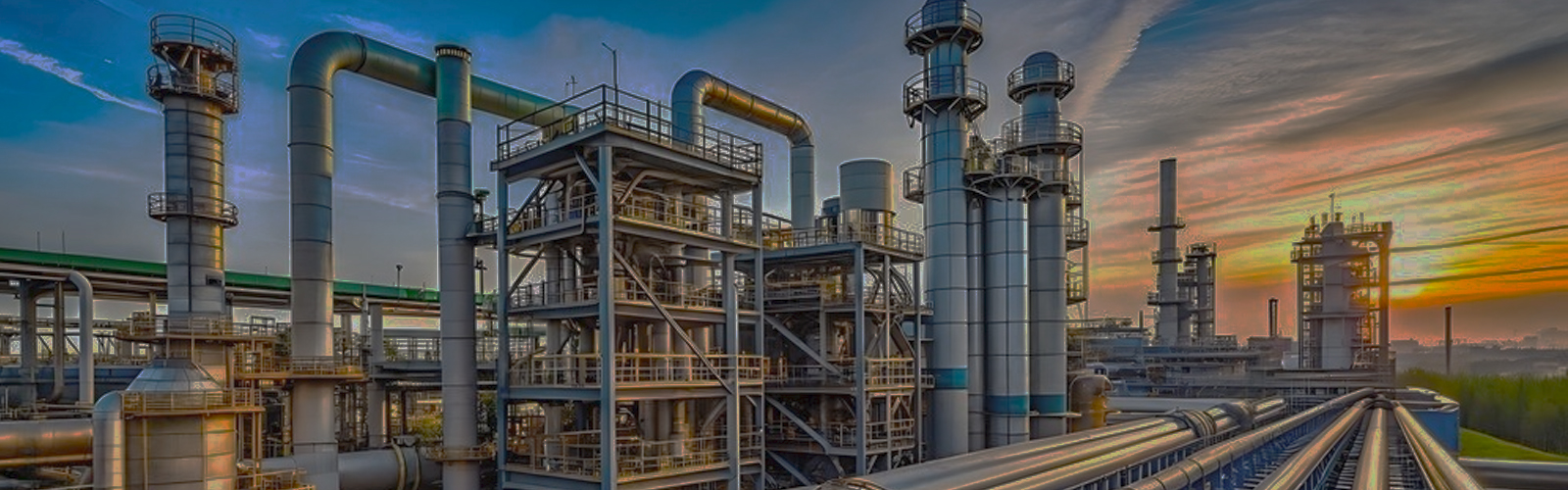
In oil and gas processing environments — particularly across Gulf region refinery complexes — radiant superheaters and boiler tubes operate under conditions that expose every fitting to relentless thermal cycling, sustained elevated pressure, and oxidizing combustion atmospheres simultaneously. Return bends in these systems are not passive connectors. They are the highest-stress points in the circuit, and material selection at those locations determines whether a system runs reliably through a full turnaround cycle or fails ahead of schedule.
Grade 347H is the established specification for these applications precisely because its controlled carbon range and niobium stabilization maintain creep resistance and stress-rupture strength at the temperatures these systems sustain. Engineers evaluating alternatives — including ستانلس ستيل 316, which performs well in moderate-temperature corrosive service — will find that 316's austenitic structure lacks the grain boundary reinforcement needed to resist creep deformation above 800°F under continuous load. Where ستانلس ستيل 316 is appropriate for lower-temperature process lines and corrosion-intensive fluid handling, radiant superheater circuits and fired heater coil returns demand the elevated carbon content and stabilization chemistry that only 347H provides.
The specific applications where this distinction is most consequential include:
-
Crude distillation unit (CDU) transfer lines operating at sustained elevated temperatures
-
Fired heater coil return bends subject to direct radiant heat flux and thermal shock
-
High-pressure steam injection headers cycling between operating and standby conditions
In each of these services, the as-welded condition of the return bend must retain full corrosion resistance and structural integrity without post-weld heat treatment — a requirement that 347H satisfies through niobium stabilization, and that lower-carbon or unstabilized grades cannot reliably meet.
Power Generation: Steam Lines and HRSGs
Combined-cycle power plants rely heavily on heat recovery steam generators (HRSGs) , where thermal gradients between startup and full load are severe. 347H's stabilized microstructure resists sensitization through repeated pressure-temperature cycles that would compromise lesser alloys.
High-pressure superheater outlet headers
Reheater loop connections
HRSG boiler tube return assemblies
Aerospace: Exhaust Manifolds and High-Temp Fluid Transport
Aerospace applications demand alloys that maintain dimensional stability and oxidation resistance under extreme thermal shock. 347H fits where stainless steel en 1.4408 equivalents fall short on sustained creep resistance above 1,000°F.
Turbine exhaust manifold returns
High-temperature hydraulic and fuel routing loops
Nacelle bleed-air ducting systems
Chemical Processing: Organic Acids at Temperature
Handling acetic, formic, and other organic acids at elevated temperatures creates simultaneous corrosion and thermal stress demands. 347H's niobium stabilization maintains weld zone integrity where conventional 304/316 grades fail prematurely.
Acetic acid reactor loop returns
Terephthalic acid (PTA) plant piping
High-temperature solvent recovery circuits
Knowing where 347H performs is only half the equation — sourcing verified material with traceable certifications is what separates reliable installations from costly failures.
Procurement Checklist: Sourcing 347H Stainless Steel Elbow 180 Degree Fittings in the UAE
Sourcing the right fitting isn't just a purchasing decision — it's a quality assurance exercise. A return elbow stamped with the wrong grade designation can survive incoming inspection and still fail catastrophically in service. For procurement teams operating in the UAE, where ADNOC-aligned projects and petrochemical facilities set exacting documentation standards, the verification process must begin well before a purchase order is confirmed.
5-Step Verification Checklist:
-
Review the MTR for carbon content — confirm carbon is held at 0.04%–0.10% and niobium is present at a minimum of 10× the carbon content.
-
Verify ASTM A403 WP347H stamping — WP347H is the specific grade designation for wrought buttweld fittings and must appear on all inspection documents, not just the mill certificate.
-
Confirm dimensional compliance across fitting types — suppliers stocking 347H return bends often carry the full range of wrought fittings, including 90-degree elbows. Request dimensional data sheets that reference stainless steel 90 degree elbow dimensions per ASME B16.9 alongside your 180-degree return bend specifications. Inconsistencies in how a supplier documents standard elbow dimensions are a reliable indicator of broader traceability gaps.
-
Clarify HSN codes before import — 180-degree return elbows typically fall under HS 7307.23; misclassification in UAE customs documentation can cause costly clearance delays.
-
Distinguish tier-one manufacturers from generic stockists — ask for traceability records linking each heat number to a specific production batch.
Qualifying your vendor is as critical as qualifying the material itself. Tier-one manufacturers maintain integrated mill-to-fitting traceability, third-party inspection reports, and documented heat treatment records. Generic stockists may offer competitive pricing but frequently lack the documentation depth required for ADNOC, petrochemical, or aerospace end-use approvals. A supplier who cannot produce accurate stainless steel 90 degree elbow dimensions on request — a straightforward ASME B16.9 reference — is unlikely to provide the rigorous MTR documentation that 347H procurement demands. Require full documentation packages before approval — not after.
Last updated: May 1, 2026
Grade 347H is specifically engineered for continuous service in the chromium carbide precipitation range of 800°F to 1500°F (427°C to 816°C).
Source: ASTM International / ASME
The inclusion of niobium acts as a stabilizer that binds with carbon to prevent the formation of chromium carbides at grain boundaries during welding, eliminating the need for post-weld annealing.
347H maintains its structural integrity and resists intergranular corrosion at elevated temperatures up to 1650°F (900°C).
Dimensional accuracy is governed by ASME B16.9 for factory-made wrought butt-welding fittings and ASME B16.28 for short radius elbows and returns.
he 'H' designation in 347H signifies a higher controlled carbon content of 0.04% to 0.10%, providing significantly higher creep strength compared to standard 347 or 304L.